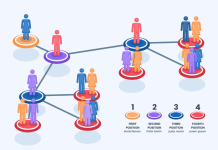

Imagine a relay race where every runner must pass the baton perfectly for the team to succeed. If one runner stumbles or drops the baton, the entire race risks falling apart. This analogy fits perfectly with how modern microservices manage transactions. Each microservice represents a runner, responsible for a part of the process, and the baton—data—must move flawlessly across them. Ensuring that happens without chaos is where the Saga Pattern comes in.
This architectural approach has become vital in distributed systems, helping developers manage complex workflows where traditional database transactions can’t easily be applied.
Understanding the Need for Saga Pattern
In monolithic systems, transactions are straightforward—everything happens in one place, and either the entire process succeeds or it rolls back entirely. But in microservices, each service owns its database, making a single, all-or-nothing transaction nearly impossible.
This is where the Saga Pattern acts as the conductor of an orchestra, ensuring each microservice plays its part in harmony. It breaks large transactions into smaller, local ones that execute in sequence. If one service fails, compensating transactions are triggered to undo previous steps, maintaining system consistency.
For learners eager to understand this orchestration deeply, enrolling in a full stack developer course in bangalore provides hands-on exposure to distributed systems and transaction handling across microservices.
How the Saga Pattern Works
The Saga Pattern primarily operates in two ways—choreography and orchestration.
In choreography, microservices communicate through events. One service completes its task and emits an event that triggers the next service. Think of it as dancers following cues from one another without a central choreographer.
In orchestration, on the other hand, a central coordinator controls the flow. It tells each microservice what to do and when, similar to a maestro guiding musicians in a concert.
Both approaches have their strengths: choreography promotes autonomy and scalability, while orchestration ensures clear control and predictability. Selecting between the two depends on your system’s complexity and need for control.
Advantages of Using the Saga Pattern
Implementing the Saga Pattern introduces several benefits beyond transaction consistency. It enhances fault tolerance, as compensating transactions ensure that failures don’t result in partial data updates. This design also improves scalability since each microservice can handle its local transactions independently.
Moreover, sagas bring transparency to system operations. Developers can trace each step of a transaction, making debugging and monitoring more accessible. This clarity becomes especially crucial when dealing with large, distributed applications where understanding dependencies is key.
Professionals mastering these skills often gain the expertise to build resilient and fault-tolerant microservice architectures that are prepared for real-world scalability challenges.
Challenges in Implementation
While the Saga Pattern is powerful, it comes with its complexities. Designing compensating transactions can be tricky, especially when data dependencies between services are tight. Developers must carefully think through every potential failure scenario and ensure rollback mechanisms don’t introduce inconsistencies.
Another challenge lies in maintaining data visibility. Since no global transaction log exists, monitoring and debugging require additional infrastructure like distributed tracing or event logs.
Performance can also be affected, as sagas rely on asynchronous communication and multiple message exchanges. However, with robust design principles and proper tooling, these challenges can be managed effectively.
Real-World Use Cases
Many industries leverage the Saga Pattern for critical applications. In e-commerce platforms, for instance, placing an order involves multiple services—inventory, payment, and shipping. If payment fails, a compensating transaction ensures inventory is restored.
Similarly, in the travel industry, booking systems coordinate flights, hotels, and car rentals. When one booking fails, other reservations are automatically rolled back, preventing inconsistent user experiences.
This decentralised yet controlled system design allows businesses to maintain trust and reliability, even in complex transactional workflows.
Conclusion
The Saga Pattern is the unsung hero of distributed architecture—silently managing coordination among microservices to ensure consistency, reliability, and resilience. It exemplifies the balance between autonomy and control, offering developers a structured approach to managing complexity in modern systems.
As organisations continue moving toward microservice-based architectures, understanding and implementing saga-based workflows becomes invaluable. For aspiring professionals, mastering these concepts through structured learning paths like a full stack developer course in Bangalore can provide the foundation to design scalable, fault-tolerant systems that perform flawlessly—even when the baton must be passed hundreds of times.