
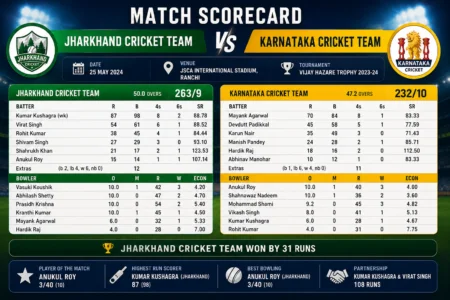
A cricket scorecard gives readers a clear record of what happened during a match. On sportstatsflow.com, cricket followers can explore scorecard information and use match figures to understand team performances. The final result tells everyone which side won, but it does not explain every reason behind that result. A scorecard records individual contributions, bowling spells, partnerships, wickets, and the scoring pattern across an innings. These details help readers understand whether a team started well, recovered from pressure, or struggled during important overs. They are also useful when comparing performances across several matches. Coaches, players, analysts, and ordinary supporters can all find something valuable in a well-presented scorecard. The important part is knowing which figures to check and how to interpret them fairly.
A Team Needs More Than Runs
The total score is an obvious measure of batting performance, but it does not describe the complete innings. A team might reach a large total because one batter played an outstanding innings while others contributed very little. Another team may have several players scoring useful runs without producing one particularly high individual score. Both approaches can create competitive totals, but they reveal different things about batting depth. The scorecard helps readers identify how the runs were distributed across the lineup. It also shows the wickets lost and the number of overs used. A team that scores quickly while retaining wickets may have more flexibility near the end. Looking beyond the total helps explain how well the batting lineup worked together.
Opening Partnership And Stability
The opening partnership can set the tone for an innings. Openers face the first bowling spell and often need to balance careful shot selection with scoring opportunities. Their partnership figures show how many runs were added before the first wicket fell. A strong opening stand can provide confidence to the middle order and allow later batters to approach their innings with more freedom. However, a large partnership is not always enough to guarantee a strong final total. The team still needs to maintain its scoring pace and avoid losing several wickets quickly afterward. Readers should compare the opening partnership with the final score and the fall of wickets. This gives a better idea about whether the early advantage was used effectively.
Middle Order Contributions
The middle order often handles situations that require patience, quick scoring, or rebuilding after early wickets. Its contribution can be especially important when the opening batters do not provide a strong start. A scorecard shows the runs scored by each middle-order player and how many deliveries they faced. Readers can identify whether the players built a partnership or struggled to settle at the crease. In a limited-overs match, middle-order batters may need to rotate the strike and target particular bowling options. In Test cricket, they may have to protect the innings after a difficult session. Their role depends on the match format and situation. Comparing individual scores with the wicket timeline helps explain how effectively the middle order performed.
Lower Order And Tail End
Lower-order batters can influence the final total more than people sometimes expect. They may add valuable runs after the main batting players have been dismissed. A short partnership between lower-order players can change the difference between a modest total and a competitive one. Their contributions are not always measured through high individual scores because even a few runs can matter. The scorecard shows whether lower-order batters remained not out or were dismissed while trying to increase the total. It also records how many deliveries they faced. Readers should avoid ignoring these entries simply because the players are not specialist batters. In close matches, runs added near the end can become important when the opposition begins its chase.
Bowling Plans And Results
Bowling statistics help readers understand how a team attempted to control the opposition. The scorecard shows which bowlers completed overs, how many runs they conceded, and how many wickets they took. A team may use different bowling styles to create pressure and prevent batters from settling. Some bowlers focus on maintaining a tight line and length, while others attack for wickets through pace or variation. The scorecard records the outcome through figures, although it does not explain every tactical decision. Readers can compare bowling spells to see which players controlled the scoring and which ones struggled. The number of overs delivered by each bowler also shows how the workload was shared across the attack.
Wickets At Important Times
The timing of wickets can be just as important as the number taken. Removing an opener early may prevent a batting side from building momentum. Dismissing an established batter after a long partnership can create a chance for further wickets. The fall of wickets section helps readers identify when these events happened. A team taking three wickets in the first ten overs may have placed the opposition under pressure from the beginning. Another team taking three wickets during the final overs may have prevented a much larger total. The scorecard provides the sequence, while the match situation explains the importance. Reviewing wicket timing can help readers understand why a bowling attack performed well even when the final wicket tally looks ordinary.
Fielding Contributions Matter Too
Fielding does not always receive the same attention as batting and bowling statistics, but it can influence match results. Catches, run outs, and other fielding efforts can change an innings quickly. Scorecards usually record the dismissal method and may identify the fielder involved. A caught dismissal can show which player completed the catch, while a run out entry may mention the fielding contribution. Not every scorecard displays detailed fielding statistics in the main table. Some platforms provide a separate fielding section with catches and other records. Readers can use these details to understand how the fielding side supported its bowlers. A team that takes difficult catches and prevents extra runs can gain an advantage without those contributions appearing in the batting total.
Compare Matches Carefully
Comparing scorecards from different matches can help readers notice patterns in team performance. They may look at batting averages, strike rates, partnerships, bowling economy, and wickets taken across a series. These figures can reveal whether a team has consistent openers or depends heavily on one middle-order batter. They can also show whether the bowling attack regularly takes early wickets or struggles during the final overs. However, comparisons should be made carefully because every match has different conditions. The pitch, opposition, venue, weather, and match format can influence performance. A team scoring fewer runs on a difficult surface may have performed better than another team with a larger total on an easier pitch. Statistics become more useful when the conditions are considered.
Home And Away Conditions
The venue can influence how teams perform, and scorecards provide a record that can be compared across different grounds. Some pitches support batting, while others may offer assistance to fast bowlers or spin bowlers. Ground dimensions can also affect the number of boundaries scored. A batter may find it easier to clear a shorter boundary, while a bowler may benefit from a larger playing area. Scorecards do not always explain these conditions directly, but they preserve the figures produced during the match. Readers can compare performances at different venues and look for patterns over time. These comparisons should not be treated as proof of one player’s ability because conditions change between matches. Venue information adds context to the statistics rather than replacing them.
All Rounders And Team Balance
All-rounders can contribute through both batting and bowling, which makes their scorecard entries particularly interesting. A player might score 35 runs and take two wickets during the same match. That contribution can help a team in several areas and provide additional selection flexibility. Readers should look at both sections of the scorecard when reviewing an all-rounder’s performance. A player who scores useful runs but does not bowl may have played a different role from someone contributing in both departments. Some scorecards include a summary of all-round performance, while others require readers to compare the batting and bowling tables manually. The complete record gives a better understanding of the player’s influence than either section alone.
Bench Strength And Selection
Team selection can influence the way a match develops. A scorecard shows which players appeared in the playing lineup and which members of the squad did not participate. Depending on the competition, the match details may also list substitutes or replacement players. Readers can compare selected players across different fixtures and notice changes in batting order or bowling combinations. A team may include an extra batter when it expects a difficult pitch, or choose another bowling option under different conditions. Scorecards do not reveal every reason behind selection, but they provide a record of who played and how they performed. Over several matches, these records can help followers understand changes in team balance and player roles.
Use Statistics Without Guessing
Statistics are useful when they are interpreted accurately. A high strike rate does not automatically mean a batter played a better innings, and a low economy rate does not always mean a bowler controlled the match. Readers should consider the format, target, opposition, pitch, and stage of the innings. A batter might score slowly because the team needed to avoid losing wickets. A bowler might concede runs while taking important wickets against aggressive batters. These situations require more context than one figure can provide. It is better to compare several relevant statistics and then review the match circumstances. Scorecards provide evidence, but they should not be used to make unsupported claims about players or teams.
Conclusion
Cricket scorecards are useful for reviewing team performance because they show how runs, wickets, partnerships, bowling spells, and fielding events shaped a match. The figures help readers identify strengths and weaknesses across different parts of the lineup. They also make comparisons between matches easier when the format and playing conditions are considered. Looking beyond the final total creates a more balanced understanding of the result. Visit sportstatsflow.com for cricket scorecard information, player statistics, and match details that help you follow team performances with greater clarity.
Read also :-